Showing posts with label BYOD. Show all posts
by

Live Show: Business Productivity Reinvented

image

Title: Productivity Reinvented

Session Abstract: Edge is joined by Ryan Darby to discuss how Office 365 is Microsoft's fastest-growing commercial product ever and is now the number one deployed application in the enterprise. It is the company's most profitable business and productivity product. but how does this translates into productivity for business users and project delivery.​​

Suitable For :    Business Analyst, Consultant, IT Architect, IT Pro, Sales
Track :    Collab365 Live Show
Live Video :
Live Show – Business Productivity Reinvented

by

Live Show: Office 365 User Adoption

image


Title: Office 365 User Adoption

Session Abstract: In this session Edge is joined by Sonia Cuff MVP and Paul Woods.

End-users often see technology from a very personal point of view. While IT is likely focused with the mechanics and logistics, your clients, the users are scratching their heads thinking "what's the real benefit here?". Cue for the adoption strategy. With Office 365 becoming so pervasive in our business, adoption is now a key consideration in any rollout. Let's discuss the challenges, the goals and risks of this fascinating topic.​​

Suitable For : Administrator, CIO, COO, CFO, CMO, CTO, End User, Power User

Track : Collab365 Live Show

Live Video: Live Show – Office 365 User Adoption

by

The Case for Privileged Access Control


Another day, another big data leak. Do you have a minute? Let's talk a bit about basic security and how even the “big guys” can have it wrong.

Since you're a young IT professional you hear the mantra that login credentials (username, password etc) should never be shared nor written in plain-text (Hello, TickeTek!!). So, why do we keep seeing these things in workplaces? Passwords for network shared on stick notes, handwritten in walls, displayed in big monitors for the sake of convenience…

image

image

The answer is: Unfortunately, this is quite a common practice and worst coming from bad decision making.

The Weakness Stand

According to a report from Centrify: State of Corporate Perimeter about 50% of the USA and 1/3 of UK leaders believe it is easy for someone with old passwords to login into company systems.

Even considering that most of the companies have an off-boarding process for contractors, it can take up to a week to completely sanitize access rights and passwords to all the sensitive data once handled by those individuals. One week is enough time for anyone with ill intentions to go back and hack into systems. And that isn't a rare incident.

image

Privileged Accounts: Free as in Free Beer

It gets worse. The report revealed that privileged accounts for systems, and network devices are being shared without any policies to protect them. 40% of U.K. IT leaders working for big companies (over 500 employees) said more than 10% of their staff have privileged access to data in some form.

This number jumps to 50% for small and mid-sized companies (less than 500 employees). Too many people with too much, unnecessary, power in their hands. We are talking about confidential and highly sensitive information kind of access. Rightly so, 62% of U.S. IT leaders believe their companies have too many privileged users. Look at this: Security Auditors guess Australian government database passwords on first attempt! That’s shocking!

image

Cultural Differences?

Now one thing to consider. This report was done with 200 companies in the USA and 200 in the UK. One might think that a more liberal economy would pose a bigger risk to IT security systems. Truth is, it does not. The overall pattern is consistent across all groups in both countries. For example, around 50% percent of all companies involved in the study confirmed that their companies had a data breach. And the bad guys are there for the taking like sharks.

A Backup Always Work, The Restore Is What Fails

Almost all companies have some sort of identity keys in place but nearly half of them have monitoring, auditing or privileged identity management in place. Quite surprising, 1/3 of these companies don't have trained employees to respond to a data breach or how the accounts are used. They are simply given to folks and trusted they will do good with them. No wonder so many breaches happens.

The Disaster is a Decision

Often times we hear that a disaster is a series of small events that lead to a big event. It is very surprising that experienced senior managers and leaders on this day and age are still following bad decision making frameworks, yet admitting they do need to do a better job with their data. The quote "When a data leak happens, it is probably your fault" is becoming more alive than ever.

by

I am Speaking at the Collab365 2016 Event

Once again I got confirmed as a speaker for the Collab365 Conference. This is one of the coolest conferences around from the people organizing it to the folks participating online. A single session can easily reach thousands of people, so you can imagine my excitement. And as a plus, it is always great being at Microsoft HQ in Redmond. Also a good time to reconnect with folks from the Office 365 team in their offices. (*cough*also visit the Microsoft store*cough*)

400x133_speakerbadge_summit.jpg (400×133)

My session is as usual around Office 365 Compliance and Data Protection and it is called: "Office 365 eDiscovery: DLP for your Business and Your Data".

Join the Collab365 Summit and watch the sessions, there is an incredible amount of brilliant minds and souls behind this event, doing this for the community at large.

Where Can You Get More Information and Watch the Sessions?

Go to http://collab365.events/collab365-summit-2016/ . You can also follow the twitter @Colla365 and the hashtag #Collab365

Also, who doesn’t love an opportunity to visit Microsoft Headquarters in Redmond Smile

image

image

by

How Secure is my Data in the Cloud?

This is by far the most common question I get when talking to people about cloud migrations. And rightly so, information security (together with data privacy) is amongst the top concerns for businesses looking to go to the cloud computing.

image

To be quite frank:

  1. Generally the data stored in the cloud is very secure and
  2. Most likely it is safer then it currently is in your company.


A New Model Brings New Threats

Now let’s not make a mistake here, cloud computing does raises security issues that are not typically found when your data is stored on-premises in your own building. So much so that industry standards are still adapting to cloud specific challenges. For example, not many people realises that your company data might be stored in a common datacenter where data from other companies are stored as well. The concept of multi-tenancy scares a hell of a lot of people.


Who is Ultimately Responsible for Securing my Information?

This is an important question and before we answer that, let’s take a step back and discuss the matrix of responsibility here. To answer that question, first we need to assert the nature of the information stored because it is the data sensitivity who will dictate the level of infrastructure security necessary.

OK, so now that we have that in mind, the second part is about addressing the responsibility. The cloud provider is most likely to be responsible for the security and privacy controls which will be available to you.

Then now you have it:

  1. The cloud provider is responsible for the infrastructure lockdown, and
  2. the customer is the one who drives the data protection requirements.

It does not matter that you store your data in the cloud but still uses weak password controls or poorly governed processes around your business and data access, right? That’s why a proper cloud security assessment is so important because most likely, when a data breach happens it is because of you. Don’t be ashamed to assume if you have, weak security controls is something very pervasive in our industry as you can see here.


What Are my Responsibilities as a Cloud Customer?

You need to understand what security controls your business need, what data breach controls you want, what regulatory needs your industry requires etc. Cloud companies like Microsoft or Amazon won’t know that. It is your job to know that and bring it to the discussion table. Like I said before, these cloud companies are extremely capable and secure so normally it is up to the customer to up their game.

In short you as a customer have to:

  • Understand your data sensitivity
  • Ensure your chosen cloud provider offers the controls your business need

So there you have it. Generally the conversation here evolves to So nothing ever goes wrong in the cloud? Are you telling me that data breaches never happen?”…no, but this is a talk for another day.

See ya later!

by

From #AshleyMadison to #PanamaPapers : Office 365 is Bringing Sexy Back to Cloud Compliance and #eDiscovery

When a data leak happens and people are affected judicially, specially suing and being sued, this starts a very long, tiring and expensive process. eDiscovery is one of the most complex parts of the whole game.

In this session we will talk about what’s eDiscovery, how big companies do it, how expensive it is and how can Office 365 help you. So if you are around Brisbane, Australia on April 14th come and join us. Bring your laptops, tablets, iPads, mobile and we will do some demos and play some roles. It will be fun Smile

Where Can I Get the Presentation Slides?

 You can get the slides here.

image

image

by

Microsoft EMS Usergroup Presentation: EMS - Everybody Together Now!

I love talking to the local cloud community. These guys are a good bunch of folks that put their own time and resources to bring innovative and up-to-date content for everyone to see for free! Big shout of to Aaron, from Microsoft for the support.

This week I presented to the Microsoft Cloud User Group in Brisbane, Australia. We talked about EMS in a demo-heavy session!

image

For this session we set vert ambitious targets in terms of demos. My opinion is that EMS is a fantastic but only through hands-on experience is how people realise the value proposition of this product. We ended up doing 40 minutes of demos with Q&A as needed. Great engagement!

BYOD Device Management and ATA Advanced Threat Analytics 

image

image


Where Can I Get the Presentation Slides ?

If you’re interested in the slides, they are here: EMS Everybody Together now! – Microsoft Brisbane Cloud Usergroup

As always, feel free to reach out if you would like to know more.

by

Surface Pro 3 Battery Problems

Do you have a Surface Pro 3?

image

Are you experiencing very low, fast battery duration like the case mentioned below? (from winsupersite)

image

If yes, looks like you’re in for a bit of a pain. Microsoft has acknowledged some Surface Pro 3 models have a battery issue where the battery charge is continuously draining and soon it will be unusable. Think in terms of, 1 or 2 hours max of duration. A far cry from ideal. There is a thread now also in Reddit on the topic and on the apparent silence from Microsoft on this.

How Do I Know My Surface Pro has this Issue?

The issue is related to the manufacturer, called SIMPLO. All models that have a battery from this manufacturer have or will have this problem.

How Do I Know the Battery Manufacturer of my Surface Pro ?

There is a neat command-line utility in windows that gives you that information. In your command-prompt type the command powerfcg /batteryreport

image

This will generate an HTML report about your battery, including the manufacturer as you can see here:

image

If the manufacturer reads “SIMPLO”, your device has a problematic battery. In this case, the manufacturer is “LGC-LGC” which indicates this device has an OK battery.

What Should I do if My Surface Pro 3 has a Bad Battery ?

If you’re Surface has less than 1 year, you’re covered by warranty. After that, you should raise your voice and complain to  Microsoft here. There is already a growing list of people doing that and pressing Microsoft for a reasonable solution, after all it is a poor component.

by

IoT, Office 365 and the Prime Position of STEM Kids in Australia


5 million new IoT (Internet of Things) devices will come online every day in 2016. How can companies join the party for a piece of this 50 billion dollars’ cake?

Come to Microsoft Innovation Centre in Brisbane (level 28, 400 George st, Brisbane) and join me to discuss:

  • The state of connected devices in Australia,
  • How can we use IoT and Office 365, and
  • Why Australians are in a prime position to lead the world in this area and the role of the STEM programs for kids is an important strategic move in the innovation agenda.

image

image

image


Where Can I Download the Presentation Slides?

You can download the slides for this presentation here.

by

How to Setup a Private Network Connection to your Office 365 ?

Here’s a question I get quite often during my compliance and data protection presentations. I thought about writing this post so I can easily redirect folks here. I am all about reusing explanations Smile

Is it Possible to Have a Secure Tunnel Connection to SharePoint Online? My Own Private Connection?

Yes, it is. Using Express Route. Not only to SharePoint Online, but to the whole Office 365. I would say, 80% of the time when folks are looking for this answer is because they are talking about a hybrid environment where they want to integrate their SharePoint on-premise with SharePoint Online and normally involved handling sensitive data.

image

What is Express Route and What it Does?

ExpressRoute initially was an Azure-only solution that got expanded to Office 365. It’s goal is to establish a private and managed connection to Office 365. What it does is to provide a dedicated network connectivity through a private connection from their (users) network to Microsoft Azure or Office 365.

How Does it Look Like from a Helicopter View?

Here’s a simple diagram of how ExpressRoute can be used with Office 365.

image

Will Having my Own Private Network to Office 365 Impact Performance?

Yes and No. Network performance will be as predictable as your own on-premises environments, it is up to you then to take care of your own network performance, of course. In some ways this is like having an Office 365 environment in your own datacenter.  One added benefit you will certainly have is that using ExpressRoute most Office 365 network traffic can be configured to avoid the public Internet, providing additional data privacy. And here is your answer for privacy and sensitivity concerns.

As usual, your data is still your data.

Who Are the Best Candidates to Use Express Route with Office 365?

Organizations that require a higher class, premium managed connectivity to the cloud. Governments also can use it. Actually Microsoft did this as a development of the famous Safe Harbour case issue.

What if my Company has Multiple Locations Across the Globe?

No worries. ExpressRoute offers something called “circuits” that applies the traffic to different geographic locations with redundancy and geo-resiliency.

image

Explain a Bit More What these Circuits are…

OK, so these ExpressRoute Circuit are geographically distributed connections that delivers by default 2 active physical connections for high availability. The networking elements are still backed by Microsoft’s connection uptime SLA (99.9 %). On a cool note, as of today, Microsoft is the only public cloud provider to offer this level of guaranteed availability for the connection. An additional benefit is that if you have Azure applications, you can this same single ExpressRoute connection.

image


How Do I Buy ExpressRoute?

There is no additional licensing costs to use ExpressRoute, however not everyone can guarantee these circuits for you, so you will have to work with the Microsoft Cloud Approved Providers. These guys can guarantee the premium network connectivity required by Microsoft and they have their own price list. Here’s a list of the MS Cloud Approved Providers for your query.

I Want It!! What Should I Do?

Network capacity plan. I mean, you are deciding to setup your own private connection to the public cloud, you’ve got to do your homework Smile Here’s a good link with some guidelines for your network infrastructure plan then contact one of the Approved Providers.

Good Luck. If you’ve done an ExpressRoute for Office 365 project, share your thoughts with the wider community. Love to hear from you.

See ya!

by

I Am Presenting at the Azure Smorgasbord in December 2015

How does your day look like on December 9th 2015?

Come join me a Microsoft to discuss and share ideas about IoT, Azure and Office 365 in Australia.

iot edge


Session Name: “IoT - The Invasion of Australia”

Abstract: “Five million new IoT devices will come online every day in 2016. Do you want a piece of this 50 billion dollar cake? Join Edge Pereira to discuss a use case of IoT in Australia and why we are in a prime position to lead the world in this area.”

Click here to register


Where Can I Find the Presentation Slides?

You can find the slides for this presentation here.

by

Hour of Code 2015. I am Volunteer. Again.

Once again this year I am volunteering time for the Hour of Code. And proud of it. Listen what Bill Gates, Mark Zuckerberg, Jack Dorsey and others have to say about this event.


What is the Hour of Code?

Launched in 2013, Code.org is a non-profit dedicated to expanding access to computer science, and increasing participation by women and underrepresented students. The vision is that every student in every school should have the opportunity to learn computer science. Code.org believes that computer science should be part of core curriculum, alongside other courses such as biology, chemistry or algebra.


Untitled

When It Happens?

Volunteers from all over the world help local teachers and their classes during the Computer Science Education Week that happens every year in December. This year it will be from December 7th to 13th.


How Can You Help?

We have this year 13.000 requests from teachers from all over the world, but only 4.000 volunteers. We need volunteers to help with the activities and help the teachers. Here are a few things you can do also to get involved:

  1. Recruit co-workers to volunteer:  Blog, share, tell your friends and co-workers about the Hour of Code and ask them to sign up as a volunteer.
  2. If you know someone who’s a volunteer, connect them with people who wants to setup Hour of Code parties.


I Want to be a Volunteer. What Do I Need to Do?

To get a better idea about what your volunteer experience will be like, have a look at this guide. There's also some extra tips about how you can get your employer and community involved with the Hour of Code.


If you know anyone needing help with it, feel free to connect with me. Remember: I am a volunteer! Smile

by

Azure DevTest Labs Now in Preview

Busy week for Microsoft Azure. Another feature comes in preview today: Azure DevTest Labs

image

What it is ?

Azure DevTest Labs gives developers on-demand self-service for Azure-based test environments. With DevTest Labs developers can:

  • Quickly provision development and test environments.
  • Minimize waste with quotas and policy enforcement.
  • Set automated shutdowns to minimize costs.
  • Create a VM in a few clicks with reusable templates.
  • Get going quickly using VMs from pre-created pools.
  • Build within Windows and Linux environments.
  • Integrate directly with your preferred CI tool, IDE, or automated release pipeline.

A really cool feature is that the Dev VMs can be saved as templates and reused across organizational teams  of developers.

image

How Much it Costs?

Azure DevTest Labs is a free service. However, you will be charged for other Azure resources that are created in the Lab. For example, you will be charged for the virtual machines that are created in the DevTest Labs per our virtual machine.

See this new product here at the Azure DevTest Labs webpage

by

Azure Disk Encryption Now Available

Brand new feature deployed today on Microsoft Azure as preview: Disk Encryption

About Azure Disk Encryption

Azure Disk Encryption for virtual machines (VMs) is the answer to many organizations that could not have VMs running in the cloud mainly due to security and legislation compliance requirements.

image


What it Does?

What this technology does it to encrypt the VM disks, including boot and data disks, with keys and policies which are controlled in the Azure Key Vault.

image


It Works for non-Windows Systems

Disk Encryption for VMs works for both Linux and Windows operating systems. It also uses Key Vault to safeguard, manage, and audit the use of disk encryption keys. All the data in your VM disks is encrypted at rest using industry-standard encryption technology in your Azure Storage accounts.

image


What Encryption is Used?

Windows VMs uses BitLocker and the Linux VMs are using dm-crypt


How Much it Costs?

This is at no charge. Gratis! The reason for that is because this is brand new and still in preview mode. Microsoft is expected to start charging for it in some way when the product becomes live. Meanwhile it is a great opportunity for you to start playing around with it and testing your systems.

by

I’m Speaking at the Infrastructure Saturday 2015 Australia

Once again I am honoured to be part of the Infrastructure Saturday event in Australia. This is such a great opportunity to connect with the local IT community and talk about tech and experiences with a local flavour and feel.

Session Details

  • Title: “When a data breach happens, what’s your plan ?”
  • Abstract: Ashley Madison, Sony, Kapersky Labs, LastPass, CentreLink, G20 event in Brisbane…What do they all have in common? They were victims of data breaches. And as you probably know by now, some were handled better than others. In this session we will talk about strategies, from mitigation to handling, used when a data breach happens (not “if”) and what controls do we have if you are using Office 365.”
  • Local: Microsoft Offices, George St, 4000, Brisbane, Australia


Where Are the Slides?

You can find the slides here


Looking forward to talk about this topic!! Below are some of the art done to promote my session. Loved the work Smile

image

edge-pereira-infrastructure-saturday-2015-1

image

edge-pereira-infrastructure-saturday-2015-2

by

List of the Most Common Passwords

Ah the joys of working on a specialized cloud security company. This list got to my hands and I am quickly circulating them with you. These guys do a lot of pen testing, network and cloud vulnerability assessment, cloud assurance etc.

Is any of these your current password somewhere? I hope not! Smile

image

Full list you can get it here

by

Microsoft to Store Data in Germany. Make it Harder for Foreign Authorities. Safe Harbour Lesson #1.

Here’s a way to increase your data protection from US government access: Store it in Germany!

As you probably know, in October 2015 the European Court of Justice declared invalid a "Safe Harbor" agreement between the European Union and the U.S. that allowed Facebook and other firms to transfer data in huge quantities to their servers in the U.S.

The court threw this deal in the bin because it was worried about "mass indiscriminate surveillance and interception" of personal data by the U.S. authorities.

And that’s what’s Microsoft is proposing: to make it harder for Government authorities to put their hands in people’s data.

image


Why Germany?

After the whole saga between Microsoft vs. USA Justice Department, European consumers, rights groups and lawmakers have expressed concern about what U.S.-based companies share with American authorities.

image

The European Union has very rigorous rules to protect data, and Germany's regulations are considered especially strict. Besides that EU authorities have been clamping down on data protection in recent months over concerns about mass spying by U.S. intelligence services. Especially after the revelations made by former NSA contractor Edward Snowden that the U.S. spied on German officials, including Chancellor Angela Merkel, angered Berlin.


Where Will the Datacenters be Located in Germany?

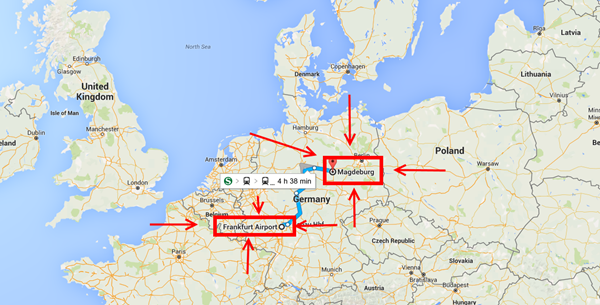
They will be in Magdeburg and Frankfurt. These new datacenters will maintain the same level of expectations , security, service and quality standards as all Microsoft datacenters globally. The services offered will abide by the Microsoft trusted cloud principles of security, privacy, control, compliance and transparency, as well as consistency with Microsoft’s global cloud services.
image

The reason for 2 datacenters is to ensure business continuity. Also their data will be exchanged through a private network to ensure data resides in Germany even in transit.


What is Planned to be Stored in Germany?

As part of this big initiative, Office 365 customers will soon be able to choose to store all data from the following products in Germany:

  • Azure,
  • Office 365 and
  • Dynamics CRM Online


Who Will Oversee this Data?

Deutsche Telekom will be the assigned data trustee and will control and oversee access to all customer data.


What is a Data Trustee?

Data trustee is an entity that will handle data on your behalf. In this case, it will be a company called T-Systems, which is a subsidiary of Deutsche Telekom. It means that Microsoft will not be able to access this data without the permission of either:

  • customers or
  • the data trustee itself

and if permission is granted by the data trustee, will only do so under its supervision.

This is ground-breaking stuff. Never done it before in Europe and after the repercussion of the Safe Harbour case, this service is expected to grow rapidly.


What are the Impacts on Compliance for Customers?

These new cloud services in Germany will specifically address organizations and enterprises operating in data-sensitive areas such as the public, financial or health sector. The immediate effect on this is positive: Now you can even choose the datacenter within the EU jurisdiction which will translate in a better granularity of controls.

We are talking about the German Government which traditionally have a very high level of data handling regulations and security by default. As a matter of fact, Germany is one of the leaders in this quadrant. Together with Customer Lockbox, customers will be able to view how and where data is processed.


Will this Avoid the US Authorities to Access my Data?

Honestly, No. Any government that requires access to data stored in the cloud, regardless of the provider (Microsoft, AWS, Google etc) will get this access. In a fight between governments and private companies, governments always win.

However this move will make it increasingly harder for governments to have this access. And that’s the main goal here. It is not to block the access, but to put stronger controls around data access by other people except the data owner.

This move will be likely followed by Amazon and Google very soon.


Sounds Great! When Can I Move my Data to Germany?

There is a LOT of ground work to cover. Involving auditing, certifications, and buildings construction. Microsoft is releasing this information now to calm-down the nerves of some big customers. The expected timeline for availability will be around the 2nd semester of 2016

Read the official announcement here from Microsoft Europe.

by

Ethereum Blockchain as a Service Now Available on Microsoft Azure

Microsoft and ConsenSys are partnering to offer Ethereum Blockchain as a Service (EBaaS) on Microsoft Azure so Enterprise clients and developers can have a single click cloud based blockchain developer environment. The initial offering contains two tools that allow for rapid development of SmartContract based applications:

  • Ether.Camp - An integrated developer environment, and
  • BlockApps - a private, semi-private Ethereum blockchain environment, can deploy into the public Ethereum environment.

image


What is Ethereum?

If you’re not following closely the whole movement started with BitCoin, have a look at this video.


Why Ethereum?

The Enterprise Partner Group at Microsoft is on the front lines with some of our largest customers.  Everyone, particularly Financial Services, is interested in Blockchain technology. While a platform like Bitcoin has many great uses specifically as a Cryptocurrency, Ethereum provides the flexibility and extensibility many of our customers were looking for. 

In Financial Services particularly, Blockchain is a major disruptor to some of their core businesses, and FinTech companies are driving innovation in this space.  Ethereum is open, flexible can be customized to meet our customer’s needs allowing them to innovate and provide new services and distributed applications or Đapps.

Ethereum enables SmartContracts and Distributed Applications (ĐApps) to be built, potentially cutting out the middleman in many industry scenarios streamlining processes like settlement. But that is just scratching the surface of what can be done when you mix the cryptographic security and reliability of the Blockchain with a Turing complete programming language included in Ethereum, we can’t really image what our customers and partners will build.

‘'Ethereum Blockchain as a Service” provided by Microsoft Azure financial services customers and partners to play, learn, and fail fast at a low cost in a ready-made dev/test/production environment. “

It will allow them to create private, public and consortium based Blockchain environments using industry leading frameworks very quickly, distributing their Blockchain products with Azure’s World Wide distributed (private) platform.

That makes Azure a great Dev/Test/Production Environment for Blockchain applications. Surrounding capabilities like Cortana Analytics (machine learning), Power BI, Azure Active Directory, Office 365 and CRMOL can be integrated into apps launching a new generation of decentralized cross platform applications.


How to Try Ethereum?

It is available as an Azure VM Template. It means you need to spin up an Azure VM with the Ethereum template loaded. The virtual machine main system is Ubuntu, and it will contain a Go Ethereum client and a Genesys block. Also this template is available on GitHub, you can get it here.


Deploying with PowerShell

You will need Azure PowerShell to perform the deployment. You can install Azure PowerShell from here.

Switch-AzureMode AzureResourceManager
New-AzureResourceGroupDeployment -Name <deployment-name> -ResourceGroupName <resource-group-name> -TemplateUri https://raw.githubusercontent.com/azure/azure-quickstart-templates/master/go-ethereum-on-ubuntu/azuredeploy.json


All this is a pretty straight forward process, you will need to specify:


Read more about this exciting announcement here.